Understand the concern
Share what has changed and what matters to you. An examination can help distinguish a small repair from a more complex dental concern.

A chipped, decayed, worn, or missing tooth can affect everyday life. Restorative dentistry looks at ways to repair a tooth or replace what is missing. Maine Dentistry can help you understand your options, starting with an examination and your own priorities.

The most useful first step is understanding what is happening before deciding how to repair or replace a tooth.
Share what has changed and what matters to you. An examination can help distinguish a small repair from a more complex dental concern.
Ask what each reasonable approach would involve, what can be preserved, whether other care is needed first, and where each step would happen.
Explore CEREC Same-Day CrownsReview a written estimate, expected visits, everyday cleaning, and follow-up. Restored or replacement teeth still need ongoing attention.
A dentist needs to examine a tooth before recommending how to treat it or whether it can be preserved. Some concerns may need attention before a final restoration or replacement. Ask about the benefits, limits, alternatives, possible stages, follow-up care, and a written estimate for your specific plan.
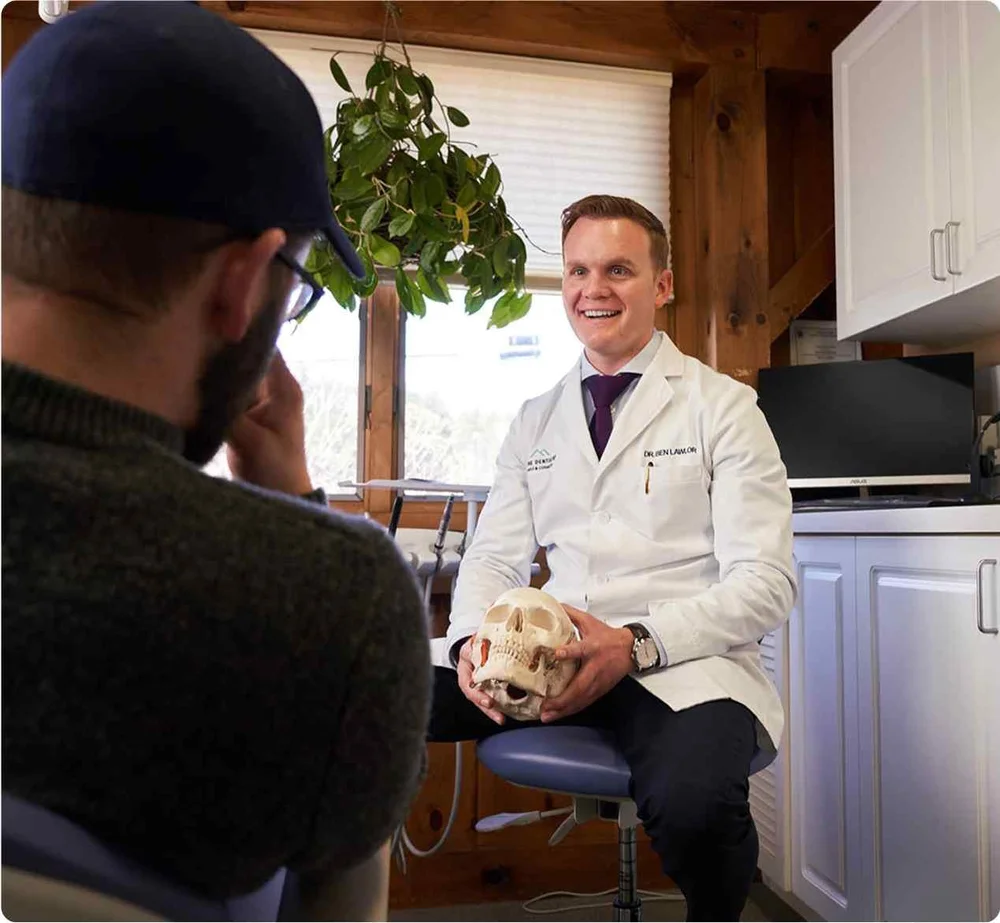
Whether a tooth has chipped, a filling feels loose, or you are unsure what to do about a gap, start with what you are noticing. We can help you arrange an evaluation and a conversation about practical next steps without assuming one treatment is right for everyone.
Contact an officeThese general answers are a starting point. Your dental team can speak to your own health, needs, and options.
Restorative dentistry addresses damaged or decayed teeth and missing teeth. Its purpose is to repair or replace teeth where appropriate, with a plan based on an examination rather than a single procedure that suits everyone.
The practice lists tooth-colored fillings, bonding, crowns, bridges, and dental implants among its restorative options. The right choice depends on what your dentist finds and which care is available at the office involved in your plan.
A filling replaces tooth structure lost to decay. Bonding can use tooth-colored material to reshape certain chipped or damaged areas. A crown covers a tooth that needs more extensive restoration. The condition of the tooth determines whether any of these is appropriate.
Sometimes a damaged tooth can be repaired, but the answer depends on the depth and location of the damage and the health of the tooth. Contact a dentist for an evaluation rather than assuming a chip only needs bonding or a crack always needs a crown.
A traditional bridge is supported by neighboring teeth and spans a gap. An implant is placed in the jaw to support a replacement tooth or, in some plans, a bridge or denture. The options differ in evaluation, steps, care, timing, and cost; your dentist can explain the trade-offs for your mouth.
Ask for an evaluation of the gap, neighboring teeth, gums, and bone. A bridge, implant-supported replacement, or another option may be discussed depending on your situation. No replacement method should be chosen from a website description alone.
Let your dentist know about all the concerns, not just the one that bothers you most. A broader plan may help set priorities and consider whether full-mouth reconstruction is relevant. The sequence and scope are individual.
What you may feel depends on the procedure and your individual circumstances. Before treatment, ask what comfort measures and anesthesia may be appropriate, what to expect afterward, and when to contact the office about persistent pain.
A small repair, a crown, and a missing-tooth replacement do not follow the same timeline. Examination findings, any preparatory care, healing, and follow-up can affect the number of visits. Ask your dentist for an estimate specific to the proposed plan.
There is no guaranteed lifespan. Daily cleaning, regular checkups, the condition of surrounding teeth and gums, and everyday wear all matter. Your dentist can explain how to care for a specific restoration and when it should be checked.
Costs and insurance benefits depend on the treatment, any preparatory steps, and your plan. Ask for a written, itemized estimate and check benefits with your insurer or the office before deciding; a web page cannot give a reliable personal price.
Maine Dentistry has offices in Auburn, Gray, and Portland, Maine. Contact your preferred office to ask about a restorative evaluation and confirm where any recommended treatment steps would be available.
Maine Dentistry has offices in Auburn, Gray, and Portland, Maine. Contact your preferred team to ask about a restorative evaluation and confirm where proposed care would take place.
34 Center Street
Auburn, ME 04210
31 Portland Road
Gray, ME 04039
383 Commercial St, Suite B
Portland, ME 04101